Sikka Press
Tanta · Gharbia Governorate · since 2016

The Egyptian railway network is one of the oldest in the world, and almost no English reference describes it.

Sikka Press is a small editorial desk in Tanta on the Cairo-Alexandria main line. Since 2016 we have maintained a single dated reference covering the Egyptian National Railways: the Cairo-Alexandria express that opened in 1856 as the first railway in Africa, the Watania sleeper service down the Nile to Aswan, the new Cairo-Ain Sokhna line, the Khedival-era stations still in use, and the practical logistics of travelling by train in Egypt today.

10 yrs field log
7 rail files
~4,800 km of network
Six files in the navigation

The six rail subjects a serious traveller builds the trip around.

Each file is a maintained working reference — dated last-verified line, current timetables and ticket conditions, station-by-station notes, and a public change log. Six sit in the top navigation; the seventh — the broader ENR history file — is in the footer because it's an essay rather than a working document.

Cairo-Alexandria express train at speed across the Delta
208 km · the original line

Cairo-Alexandria express

The main spine of the Egyptian network. First section between Alexandria and Kafr el-Zayyat opened in 1854; the full line completed in 1856, the first railway built in Africa. The current "Spanish" Talgo VIP service runs the route in 2h 30m. Eight daily express services and the standard hourly stopping pattern.

Open the file
Watania sleeper carriage interior with bunk made up
879 km · overnight

Cairo-Aswan sleeper

The Watania (Egyptian National) sleeper down the Nile to Aswan. Trains №84 and №86 daily, departing Cairo around 20:00 and arriving Aswan around 13:30 the next afternoon. Two-berth cabins, dining car, the classic overnight experience that has barely changed since the 1960s.

Open the file
The Beaux-Arts facade of Cairo Ramses Station (Mahatta Misr)
Cairo · central terminus

Misr Station (Ramses)

Mahatta Misr — Cairo's central railway terminus, the busiest station in Egypt. Built 1893 by the Italian architect Edward Matasek in Beaux-Arts style, refurbished 2011. Twelve platforms, the railway museum next door, the standard arrival point for international visitors going down the Nile.

Open the file
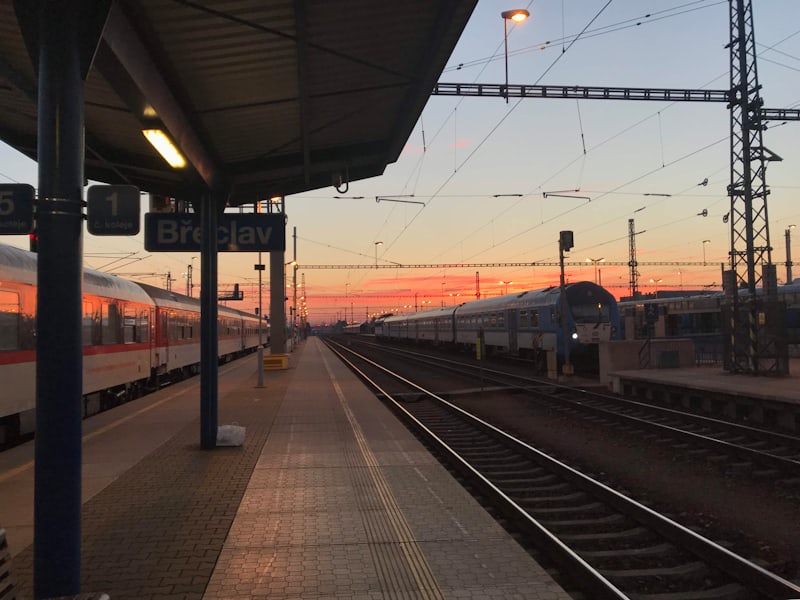
The platform at Tanta junction with multiple trains
Tanta · Delta junction

Tanta junction

Our base. The principal Delta junction on the Cairo-Alexandria main line, with branches west to Damanhur and east to Mansoura. Six platforms, the 1880s station building intact, the most reliable mid-Delta connection point. The desk's working office is six minutes' walk from the platform.

Open the file
A new ENR train on the Cairo to Sokhna line
170 km · 2014 line

Cairo-Sokhna coast line

The newest line on the network. Cairo to the Red Sea coast at Ain Sokhna, opened to full service in 2014. The route serves the industrial port, but the passenger service has built a small commuter market and weekend Red Sea traffic. The line is the first new ENR construction in three decades.

Open the file
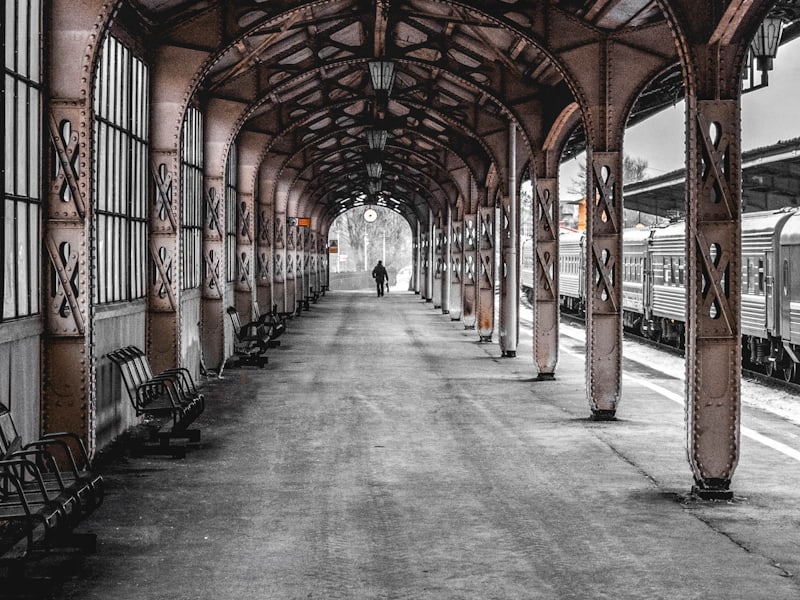
Detail of a Khedival-era ironwork canopy at a Delta station
Architectural heritage

Khedival stations

The ten major Khedival-era stations still in service: Cairo, Alexandria, Tanta, Mansoura, Damanhur, Zagazig, Asyut, Minya, Luxor, Aswan. Built between 1856 and 1903 in a mix of British, Italian and French railway-architectural traditions. The single most coherent body of 19th-century industrial architecture in Egypt.

Open the file
Method

A four-step verification cycle, on a 60-day rotation.

Train timetables and rolling-stock conditions change faster than the standard quarterly cycle accommodates. We work to a 60-day rotation on the practical operational sections of each file, while the architectural-history sections rotate annually.

Step 01

Ride it

Every route in the file is ridden by an editor at least once every 60 days on the standard service. The ticket is paid for at the normal class; we do not accept ENR press-pass complimentary tickets.

Step 02

Cross-check the timetable

Every published timing is cross-checked against the ENR official timetable, the Tanta station-master's working board, and our own dated arrival-time photograph at each major intermediate station.

Step 03

Translate Arabic notices

ENR service changes, fare adjustments and seasonal-schedule notices are issued in Arabic only. We translate the relevant ones in full on the day they are posted.

Step 04

Date and sign

Every published claim carries the date it was verified and the editor signature. Earlier entries appear in the change log; the log is append-only.

Why us

A desk in Tanta on the main line, six minutes' walk from the station platform.

The desk was founded in February 2016 by a former ENR planning-office statistician, a Cairo-based railway historian, and a French translator with twenty years' work on Egyptian transport publications. Tanta was chosen as the base because it sits on the main line equidistant between Cairo and Alexandria — every editor's commute to either end-station is approximately one hour, in either direction.

  • Local desk. Office hours Sunday through Thursday, 09:00–16:00 Cairo time. Reply window: one business day, in English, Arabic or French.
  • No commission income. Pages carry no display advertising and no affiliate links. We do not earn from ticket bookings made through any platform we mention.
  • Three editors. Three resident editors plus a rotating two-person contributor bench. Names on every dated entry.
  • Verifiable. Subscribers can request the underlying dated arrival-time photograph for any published timetable claim.
The Sikka Press editorial office in Tanta near the station
10 Years of continuous publication since the Tanta desk opened in February 2016.
~360 Train rides logged by editors across the seven covered routes since 2016.
3 Resident editors at the Tanta desk plus a rotating two-person contributor bench.
28 Bilingual monographs on individual routes and station buildings in the subscriber archive.
Who reads us

Three groups of subscribers.

The notes below come from active subscribers quoted with permission. They give a fair picture of who the desk serves.

For independent travellers planning the Cairo-Aswan sleeper, the Sikka Press file is the only English source that tracks the carriage rolling stock between the two daily services and the actual on-the-ground booking procedure at the Ramses ticket office.

Helga Bachmann Independent travel writer, Munich

When ENR introduced the new Talgo express in 2024, the desk's translation of the technical bulletin was up within three days. The Cairo press did not cover the technical detail; the desk did.

Dr. Rashid Abdelmalek Transport economics, Cairo University

The Khedival stations file is the academic resource I use in my own architectural history teaching. The bilingual catalogue cross-references against the original British Public Works Department archive — nobody else has done this.

Prof. Margaret Whitebridge Victorian architectural history, University of Edinburgh
Common questions

Six things readers ask before paying for the first month.

Can I book ENR tickets through the desk?
No. We are an editorial desk, not a booking agent. ENR tickets are bought at the station ticket office or on the ENR website; we explain the procedure for each on the relevant file. We earn nothing from bookings made through any platform.
Do you cover the Cairo metro?
No. The Cairo metro is a separate institution (NAT — National Authority for Tunnels) operating on a different network with different rolling stock and a different organisational culture. A separate editorial desk would do that better than we could.
How current are the timetables on the public files?
Every file carries a visible "Last verified" date. The 60-day rotation means any timetable change typically appears on our file within 30 days of the official ENR notice. We log fare changes within a week of the bulletin.
Is the sleeper service safe for foreign travellers?
Yes. The Watania sleeper has run continuously for sixty years on the standard format and is the recommended overnight option for visitors travelling between Cairo and Upper Egypt. The two-berth cabin format provides privacy and lockable doors. We describe the booking and the on-board experience in detail on the file.
Are the Khedival stations actually accessible to visit?
Yes — every one of the ten on our list is an active working station today. Most are open to the public during ticket-office hours regardless of whether you have a ticket; the architectural visits are part of the normal station environment. We list the photography rules for each.
Do you organise rail-enthusiast tours?
No. We do not run, sell or commission tours. We maintain a small private shortlist of Cairo and Alexandria-based rail-historian guides who have worked with our editors; Library and Field subscribers receive the contacts. We take no referral fees.

Read one file in full and decide.

The Cairo-Aswan sleeper file and the Khedival stations file are the two longest. Either is a fair test of whether the editorial standard is what we say it is.